
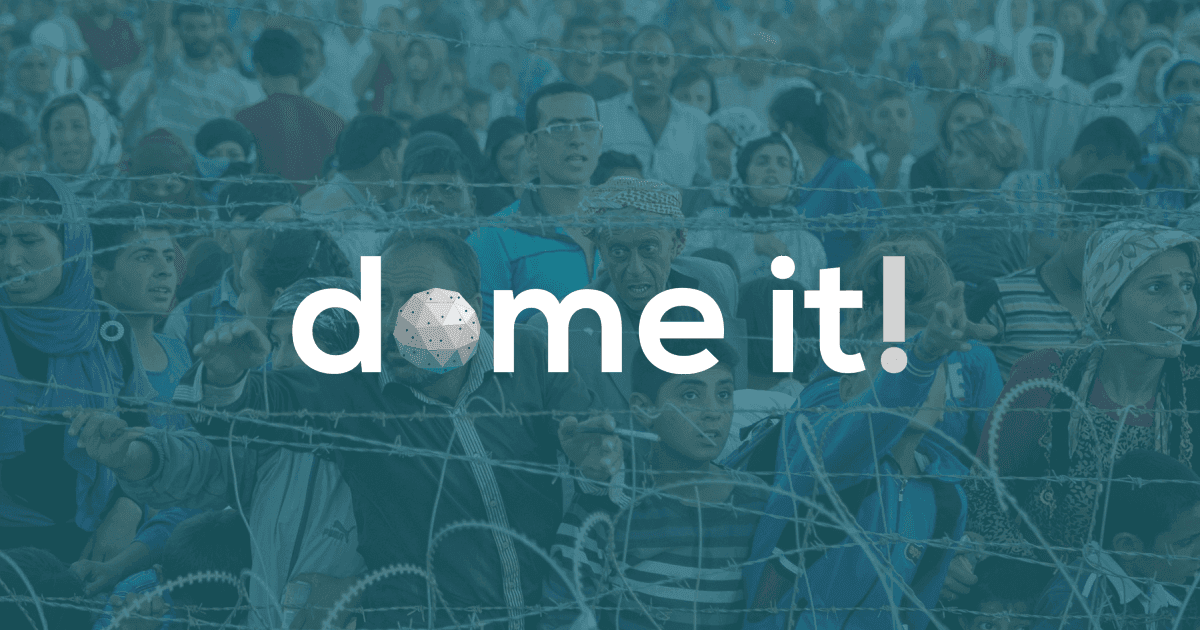
Dome It! is a multidisciplinary project conceived to address some of the most critical challenges faced by refugees living in temporary camps. The project was developed as part of the selection process for Becas Europa XII, a highly competitive pre-university excellence program (top 50 students in Spain), and represents one of my first large-scale, end-to-end projects.
I acted as the project captain, leading the conceptual design, coordinating the team, and driving the integration of engineering, mathematical modeling, and humanitarian objectives.
The goal was not to design a single artifact, but to propose a coherent, systemic solution combining housing, energy, water, food production, and spatial organization.
Context and Motivation
Refugee camps are often conceived as short-term solutions, yet many remain active for years. As a result, residents are forced to live in conditions that were never intended to be sustainable.
Through research and analysis, we identified several recurring structural problems:
- Precarious accommodation, typically based on fragile tents
- Exposure to extreme temperatures, both heat and cold
- Limited access to clean water
- Lack of reliable energy sources
- Restricted ability to grow food, affecting autonomy and long-term wellbeing
Dome It! was conceived to address these challenges holistically, rather than through isolated interventions.
The Proposed Solution
The project is structured around two tightly coupled components:
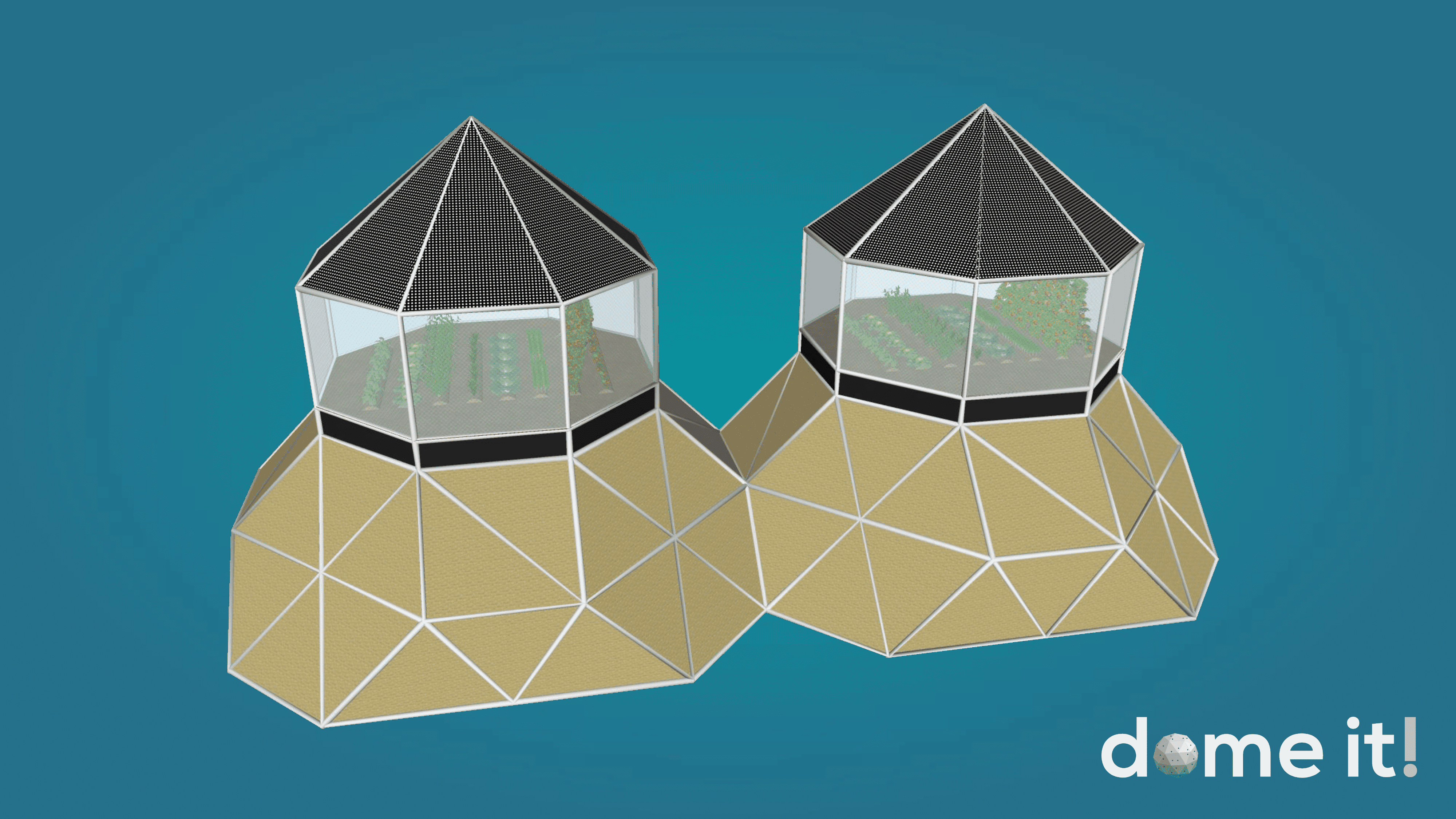
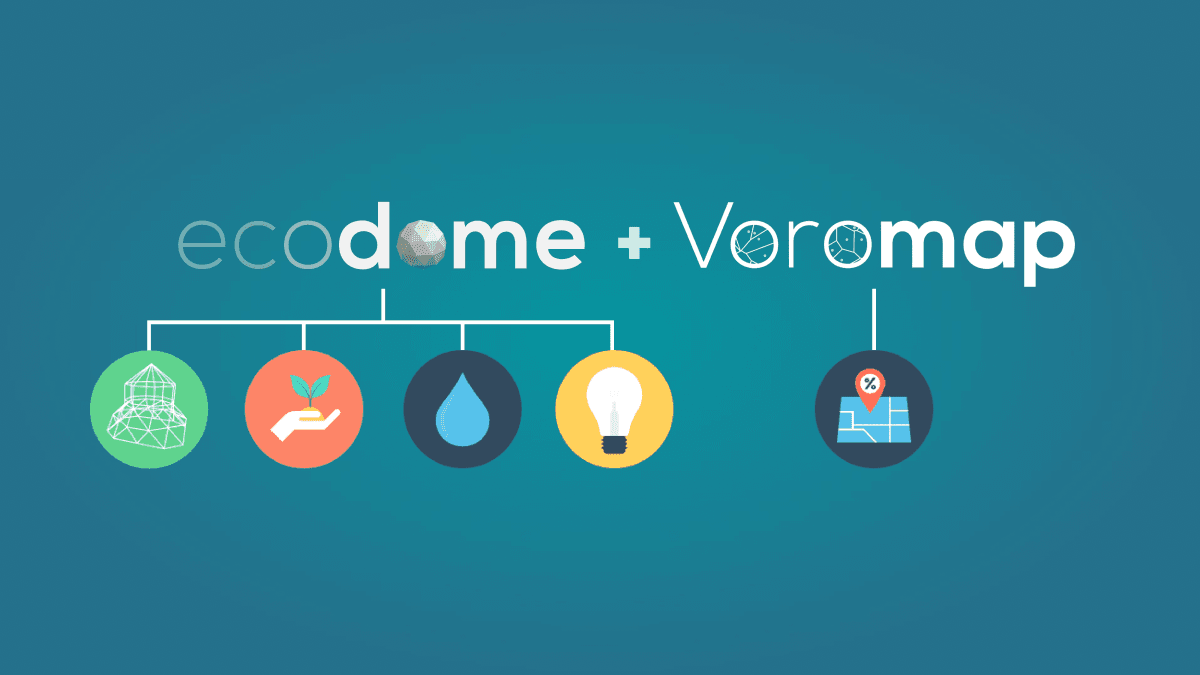
- EcoDome: a modular, self-sufficient housing unit designed for durability, efficiency, and ease of deployment
- VoroMap: a mathematical model for the optimal spatial organization of refugee camps and shared services
Together, these components form a solution that can be adapted both to newly established camps and to the reorganization of existing ones.
EcoDome
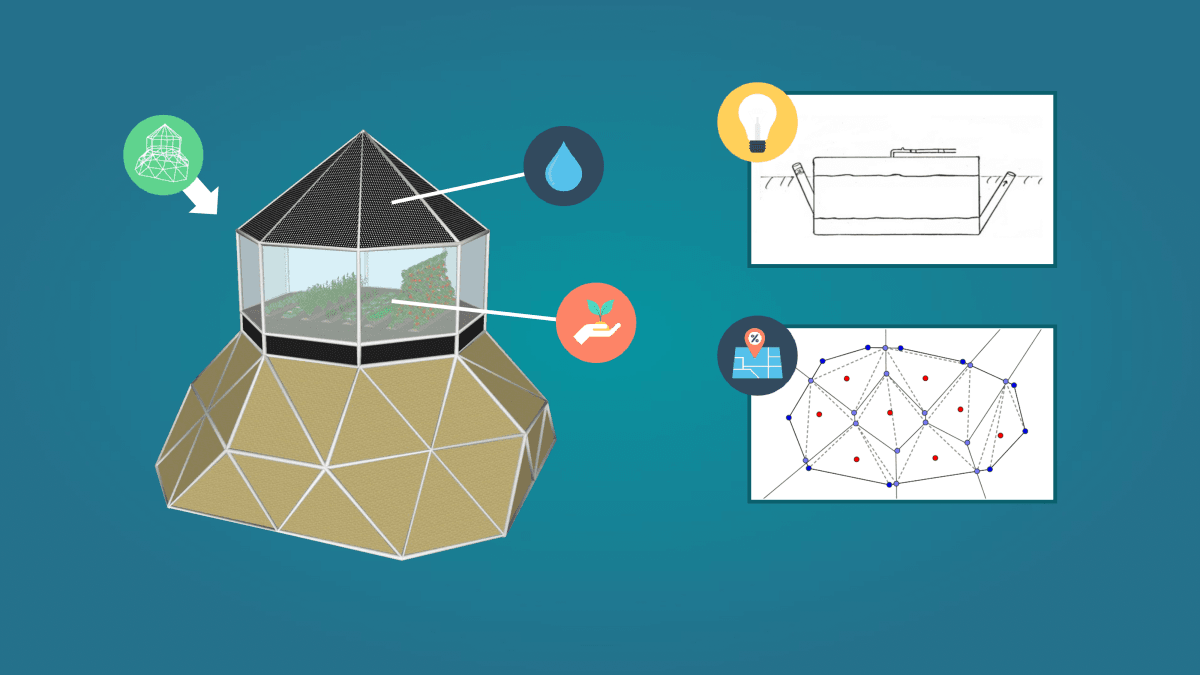
EcoDome is a modular, low-cost, and durable housing structure designed to significantly improve living conditions while remaining feasible to deploy at scale.
Key characteristics include:
- Optimized geodesic structures, minimizing the number of tubes and joints to simplify construction and disassembly
- Structural tubes that double as water circulation channels
- Integrated water harvesting using specialized roofing materials
- A rooftop greenhouse, creating a controlled microclimate for food production independent of external conditions
- Renewable energy harvesting systems designed to be efficient, reusable, and environmentally responsible
- Waste reuse mechanisms capable of producing fertilizer for crops
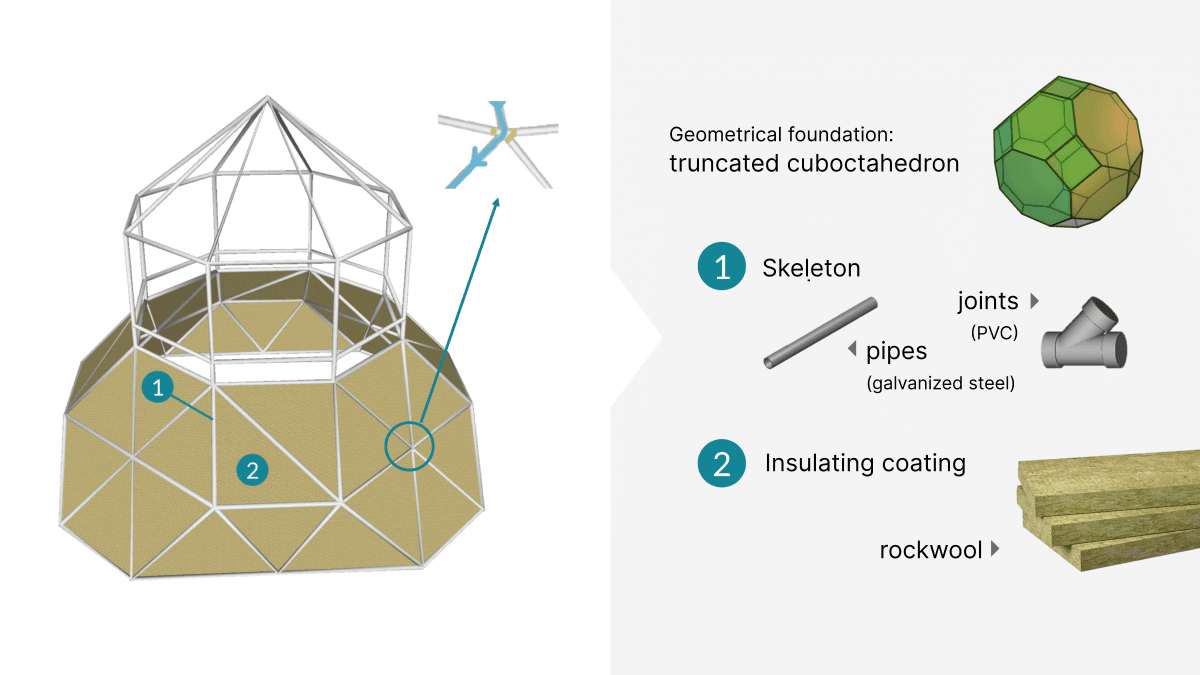
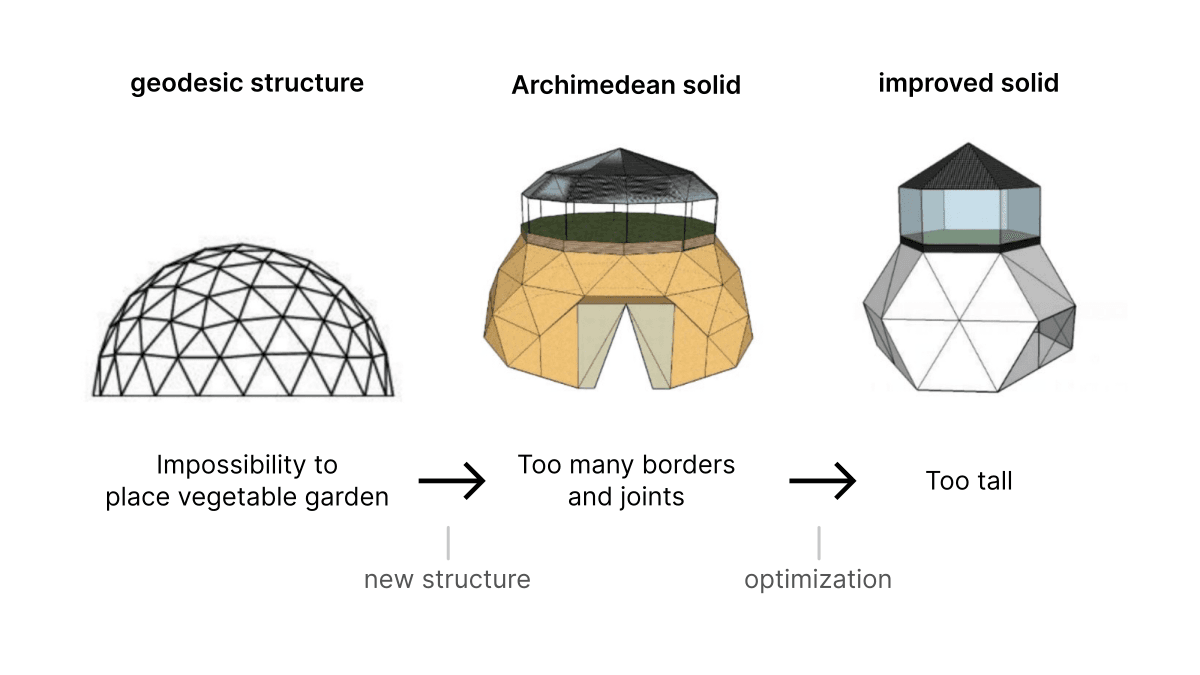
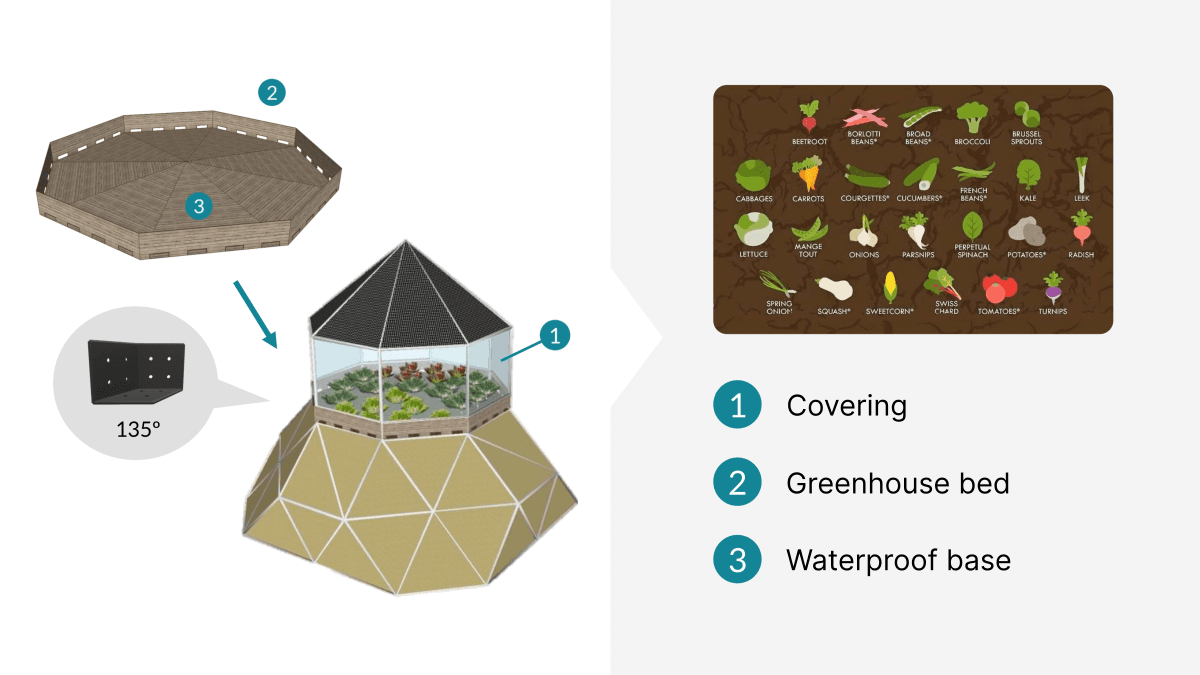
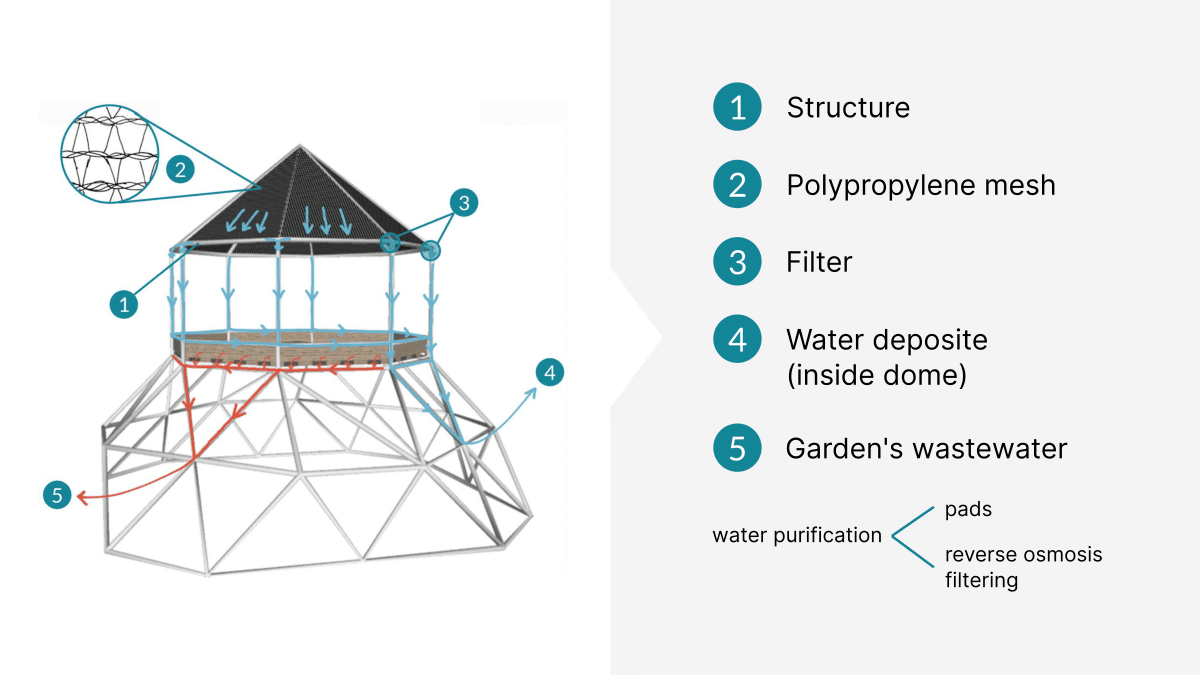
The design prioritizes robustness, autonomy, and long-term usability, while keeping costs close to those of conventional emergency tents.
VoroMap
VoroMap is a mathematical and spatial optimization model designed to organize refugee camps efficiently and equitably.
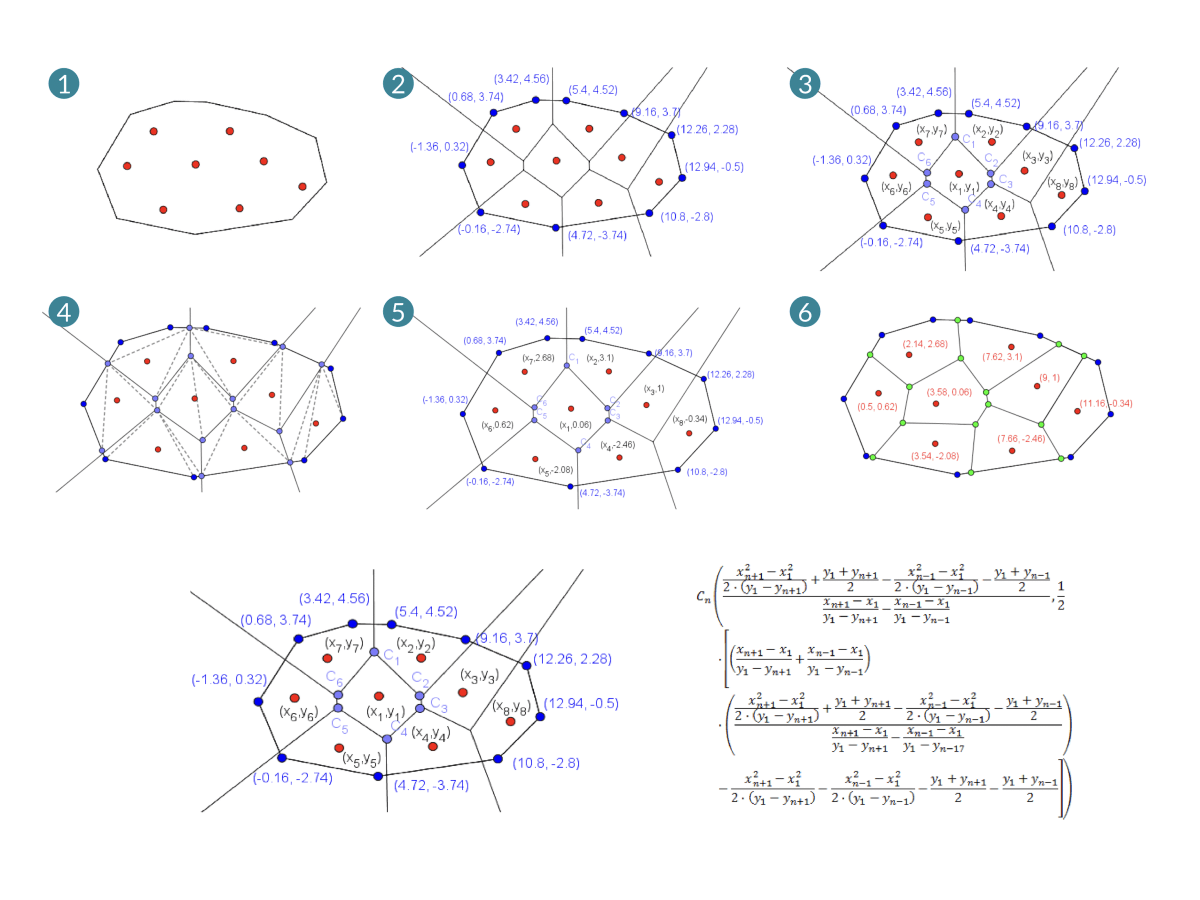
Its objectives include:
- Preventing service saturation (e.g., water points, medical facilities)
- Avoiding underutilization of shared resources
- Adapting dynamically to population changes and evolving needs
By applying mathematical modeling to camp layout, VoroMap improves access to essential services and overall camp functionality.
Team and Recognition
Dome It! was developed collaboratively with Aida Arnáiz, Alejandro Fernández, Carmen García, Carmen López, and Isabel Sánchez during the final selection weekend of Becas Europa XII, organized by Universidad Francisco de Vitoria.
As project captain, I was responsible for coordinating the team, aligning technical and design decisions, and leading the final proposal and defense.
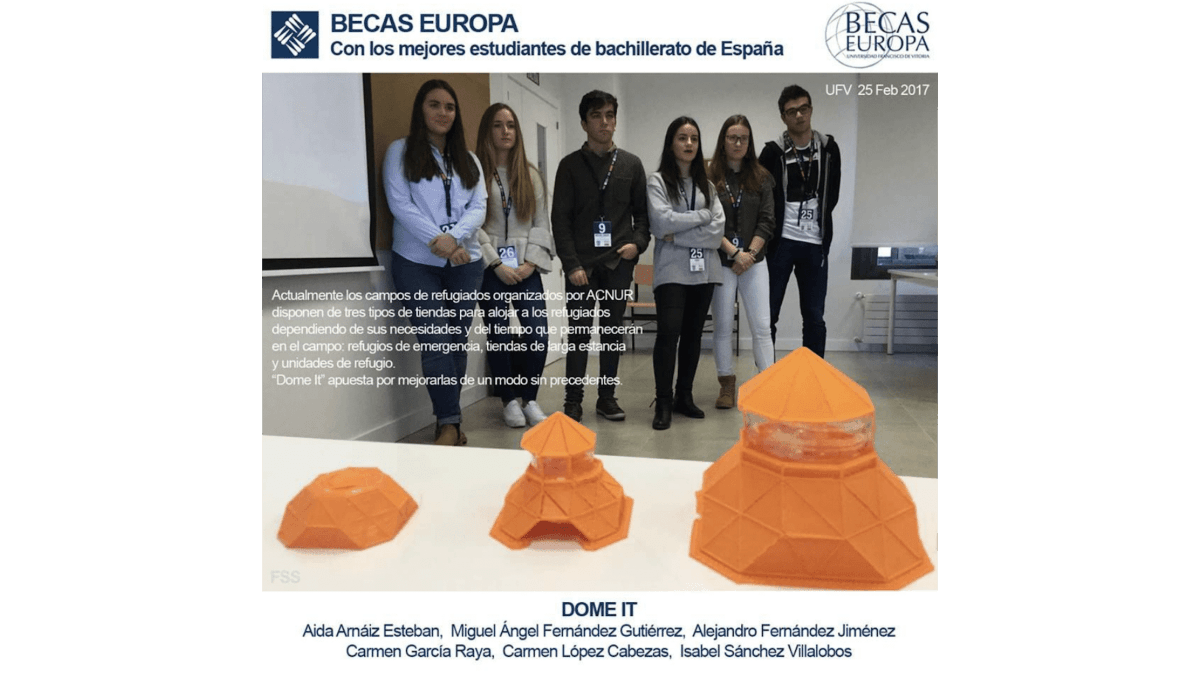
The project was very positively received by the evaluation panel and later featured in national media, highlighting both its humanitarian focus and the rigor of its development.
“There are two remarkable aspects here: an interesting and original project with a social and humanitarian objective, and the fact that this idea and its development come from very young students.”
— Diario de Cádiz
Impact and Learnings
Although developed early in my trajectory, Dome It! shaped many of the principles that continue to guide my work today:
- Systems thinking over isolated solutions
- Integration of engineering, mathematical modeling, and human needs
- Leadership and coordination in multidisciplinary teams
- Designing for real-world constraints, not idealized scenarios
Dome It! represents a formative experience in end-to-end problem solving, combining technical reasoning, leadership, and social impact.