
PictoMaker Lite is a lightweight, language-agnostic API that translates natural language sentences into sequences of pictograms. It is designed as a reusable backend service that enables accessible communication interfaces to be built on top of a simple, well-defined API.
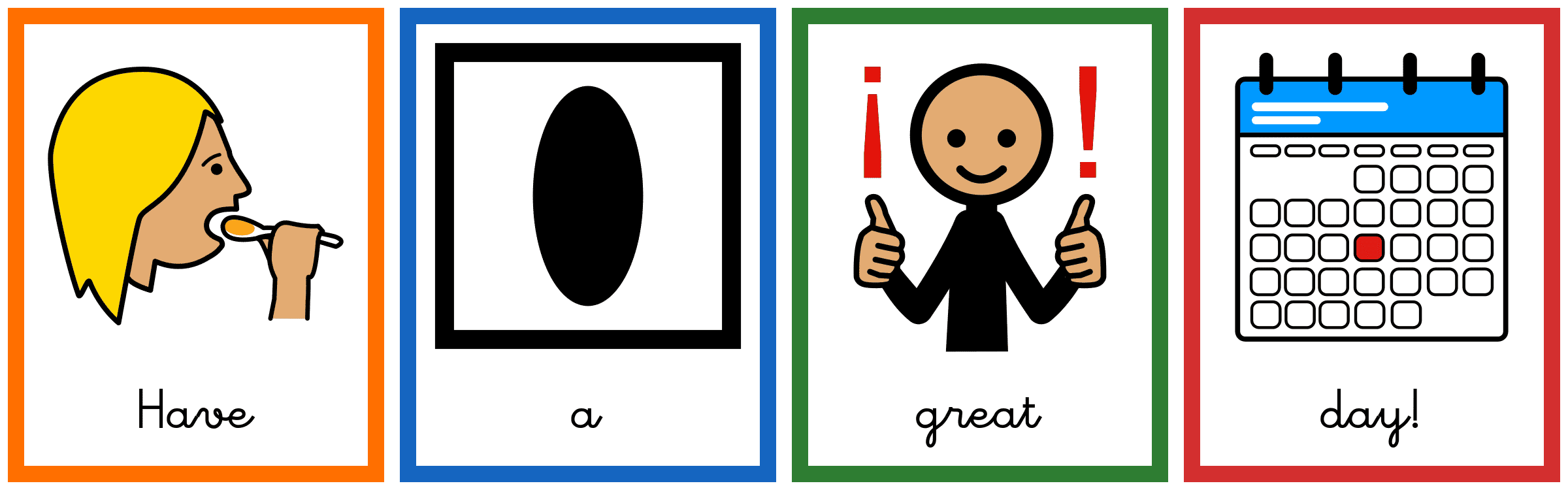
The system uses Natural Language Processing (NLP) to syntactically analyze and lemmatize input sentences in Spanish, English, and Polish (with more languages planned). Based on this analysis, it generates an ordered array of pictograms that can later be rendered by any client application.
The API extensively relies on ARASAAC, an open-source Spanish project that provides a rich and widely adopted pictogram catalog.
What PictoMaker Lite Does
At a high level, PictoMaker Lite:
- Parses natural language sentences
- Performs lemmatization to reduce words to their canonical forms
- Builds a syntactic structure of the sentence
- Maps linguistic units to appropriate pictograms
- Returns a structured, machine-consumable response
This separation of concerns allows PictoMaker Lite to act as a core accessibility service, independent of any specific UI.
Use Cases and Integrations
As a pilot use case, PictoMaker Lite was integrated into Cisco WebEx, demonstrating how pictogram-based communication can be embedded into real collaboration tools.
You can try it by adding pictomaker@webex.bot to your Webex account. The bot supports additional features such as:
- Color tagging
- Choosing between colored or monochrome pictograms
- Skin tone customization
More technical details about this integration are available here
Origins of the Project
How did it come about?
PictoMaker Lite originates from the original PictoMaker project, which I started years ago, motivated by my mother, a teacher working with students with special educational needs.
The initial version of PictoMaker was a Spanish-only web application and the first web app I ever built. Despite its simplicity, it was adopted by educators and received very positive feedback for its practical value in classrooms working with students with autism and Down syndrome.
During the Cisco Incubator Program 9.0, I was tasked with building a bot for Webex. This became the catalyst to revisit PictoMaker and rethink it from a more scalable perspective. The result was a deliberate architectural split:
- A lightweight API (PictoMaker Lite)
- One or more independent client interfaces (e.g. a Webex bot)
Why Pictograms?
Pictograms are a fundamental tool for Augmentative and Alternative Communication (AAC). They are widely used by:
- Children with special educational needs
- People with autism spectrum conditions
- Individuals with Down syndrome
- Elderly people with Alzheimer’s disease or dementia
PictoMaker Lite was designed to lower the barrier to using pictograms programmatically, enabling developers and educators to build inclusive communication tools more easily.
Why Syntactic Analysis?
Rather than performing simple word-to-image matching, PictoMaker Lite applies syntactic analysis and lemmatization to:
- Identify the base form of words
- Reduce ambiguity in pictogram selection
- Preserve sentence structure
- Help users — especially children — visually distinguish between grammatical roles
This approach improves both semantic accuracy and educational value, making the output more than a flat list of images.
Evolution into PictoMaker
PictoMaker Lite served as the technical foundation for the next generation of the project. The ideas, abstractions, and lessons learned from this API directly evolved into PictoMaker, a more complete and user-facing system.
You can find the current PictoMaker project here
PictoMaker Lite remains a key step in the journey toward building scalable, AI-powered tools for accessible communication.